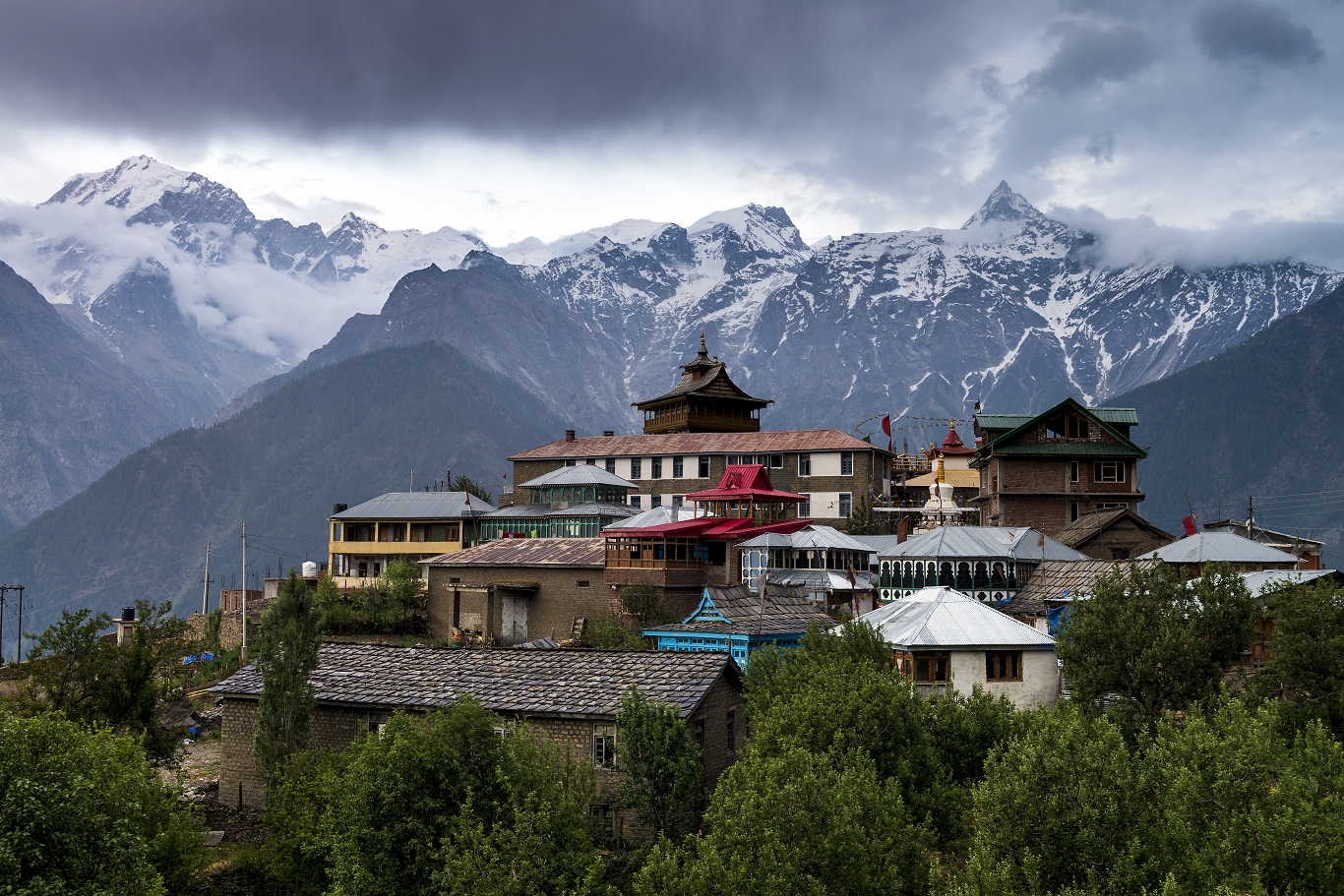
Kalpa weather in March

Kalpa Weather in March

March is a time when the winters are in their ending phase and spring is just going to start. But in Kalpa the shivering days and nights are still there with fast pace freezing winds across the city. No doubt the season gets changed but still due to hilly region, diversified flowering is quite visible and presents a picturesque and magnificent view.

Month of March in Kalpa comes with temperature ranging between 10 to 20 degree Celsius. City experiences occasional hails and thunderstorms destroying new flowering in young shoots.  Sometimes very clear skies also lessen your burden of heavy woollens and guests can visit the popular sites nearby or far ones with fun unlimited.

Spring is time of rebirth, renewal and regrowth and giving an inspiring message to people. Trees such as Rhododendron has red juicy big flowers, cones of Pinus start sprouting, Populas or Pahari Pipal’s small flowers are also struggling to ripe. Quercus or ban tree with young shoots with pinkish fruit on Acorn are also coming back to life after hibernation. The richness and diversity of flora is quite conspicuous.

In spring the length of the daylight is increasing and this is the reason the warmth is causing new plants to grow. Kalpa being an area of snowfall, flowering starts in March while in plains, the flowering starts earlier in February.

Shivratri (marriage of Lord Shiva with Goddess Parvati), the biggest festival of upper shimaliates and Holi, the festival of colors is often celebrated at the end of winter in February/march. So visitors can enjoy festival season during the visit at this point of year.

Therefore, this moderate climate of March will certainly make your trip, a basket full of joy and happiness.

Is there snow in Kalpa in March?

Yes snow is available in Kalpa in March Month but the probability is less

Get customized value for money  Kalpa Travel packages from Sunrise Holidays Shimla

Kalpa Weather

Kalpa Weather | Temperature | Climate

Beauty of hills and the pleasant weather makes Kalpa one of the most beautiful hill stations. It is situated at a height of more than 2,960  meters above sea level and experiences diverse climatic conditions. Moderately warm and pleasant climate in summers and mostly very cold climate in winters are the main features of Kalpa weather. The average temperatures during summers (March to June) are between 14°C and 20°C and with a maximum touching about 30°C. The minimum temperature during winters (November to February) can go as low as -7°C with maximum never crossing 10°C. Around Christmas, Kalpa experiences snowfall. Heavy woollens are suggested from November to February months. The rainy season is in July and august months. Best time to visit Kalpa is summers and winters as per liking.

Kalpa weather forecast

There are different weather websites available online to check current temperature and weather forecast but accuweather.com the most accurate one. The following is the current temperature and forecast for the next few days / week.

Summers in Kalpa

Summers in Kalpa are moderate and the weather is very pleasant. March-May is the months of summer and the peak seasons. The temperature ranges from 15 deg C to 27 deg C and the best time to enjoy scenic beauty. During summers Kalpa is overcrowded with tourists as temperature in the plains gets too high. People can enjoy a comfortable summer and flee them from scorching heat. The climate of Kalpa during the day time is warm and the nights tend to get cooler. Thus, one is required to carry some light warm clothes for the nights.

Kalpa Weather in March | April | May | June

Monsoons in Kalpa

July to September is the months of monsoon. During monsoon temperature ranges to 15 deg C to 25 deg C .Being a hill station it also experiences heavy rainfall and there are chances of landslides occurring here. So it is advisable not to visit Kalpa during monsoon seasons. Moreover the climate during monsoon is very humid.

Kalpa Weather in  July | August | September

Winters in Kalpa

The winters last from November to mid- February. The average temperature during winter season is 8 deg C and can dip as low as -7 deg C. Snowfall is the main attraction for tourists that Kalpa receives around the time of Christmas in December. Cold and chilly winds drops the temperature to sub zero, therefore it is advisable to carry woolens during winter season.

Kalpa Weather in October | November | December | January | February

Clothing Required in Kalpa

Carrying proper clothing is a must to enjoy nature to its fullest in Kalpa. As temperature of Kalpa is lower than that of plains proper precautions in carrying clothes is required

Summer season:  (May June): cotton clothes Rainy, autumn and spring season (July, August, September and October, March – April): Cotton and Light woolen clothes

Winter season (November, December, January and February): Heavy Woolen clothes are required.

Get customized value for money  Kalpa Travel packages from Sunrise Holidays Shimla

FAQ on Rohtang Pass

FAQ on Rohtang Pass

Is it safe to go to Rohtang Pass?

Yes it is totally safe to go to Rohtang Pass when the pass is open. The BRO looks after this pass and proper vigil is maintained during that time. The Rohtang pass is closed on Tuesday for maintenance of roads and infrastructure.

Which is the best time to visit Rohtang Pass?

Best time to visit Rohtang pass is from April end when the Pass opens till June Month. During this time snow is available at Rohtang Pass

Where to get Rohtang pass permit?

Rohtang PAss permit can be obtained from this website: https://rohtangpermits.nic.in/. The website has other related information also

Why is Rohtang Pass famous?

Rohtang pass is famous for its landscapes, being at a high altitude of around 4000 meters above sea level it offers splendid views of the snow capped mountains and deep valley. The 55 Kilometers from Manali is also awesome.

Where does Rohtang Pass lead to?

Rohtang pass leads to interior Himachal and Jammu and Kashmir. Beyond Rohtang pass one road goes towards Shimla and Tibet border areas and the other goes to Lahaul Spiti and then to Leh in Laddakh district of Jammu and Kashmir leading to Srinagar via Kargil.

Can we take our own car to Rohtang Pass?

Yes you can take your own car to Rohtang Pass after taking proper permit. Public transport including Electric buses operated by Himachal Roadways are also available.

When Rohtang Pass will open in 2023?

In 2023 Rohtang pass will open by mid of April month.

Can we stay at Rohtang Pass?

No, you cannot stay at Rohtang pass. There is no provision to stay at this high altitude place.

Is there snow in Rohtang Pass in June?

June is the fag end of snow in Rohtang Pass. If there are heavy snow falls in winter months then the snow retains till June Month

Is there snow in Rohtang Pass in July?

There are no chances of snow at Rohtang pass in July month

Is Rohtang Pass closed on Tuesday?

Yes Rohtang pass is closed on Tuesday for maintenance of roads and infrastructure

What is the time period to visit Rohtang Pass?

Tourist can visit Rohtang pass in between 15th May to till 15th Nov after that it will be closed.

What is Manali to Rohtang Pass bus Fare?

HRTC runs government operated electric bus services between Manali and Rohtang in the summer months of May and June for the convenience of tourists. The bus booking can be done at the HRTC counter on the Mall Manali. Manali to Rohtang ticket price enquiry can be done at the same counter. Every year the electric bus fare prices are decided in May month.

Himachal weather

Climate of Himachal Pradesh

More than 2400km long and some 160km wide, the Himalayas are the greatest physical feature on earth. and Himachal Pradesh is a generous section of this huge formation.

The name itself is descriptive of its characteristics – Himachal being an ancient Sanskrit compound of hima (snow) and achal (that which cannot be moved) – and thus simply means ‘the Mountain State’.

There is great diversification in the climatic conditions of Himachal Pradesh due to variation in elevation (450-6500mtrs). It varies from hot and sub-humid tropical (450-900mtrs) in the southern Low tracts, warm and temperate (900-1800mtrs), cool and temperate (1900-2400mtrs) and cold alpine and glacial (2400-4800mtrs) in the northern and eastern high mountain ranges.

The region generally experiences three seasons. The winter season spans from October to February. The summer months in Himachal are the months of March to June. By July the rainy season starts in the hilly region and it ends in September. In the winter months, some parts of Himachal experiences heavy snow fall and required woolen cloths like shawls, sweater, cardigans etc. It occurs generally in the months of December to March.

The days and nights during this time of the year become very cold. Average snowfall at elevations of above 3000 meters is about 3 meters and lasts from December to March. About 4500 mtrs, is perpetual snow.

The main season is the spring from mid- Feb to March-April. The air is cool and fresh. Colorful flowers adorn the valleys, forest slopes and meadows. In the hill stations, the climate is pleasant and comfortable.

The rains start at the end of June. The entire landscape becomes green and fresh. Streams begin to swell and springs are replenished. The heavy rains in July and August cause damage to erosion, floods and landslides.

Dharamshala has the highest rainfall of 3400mm. Spiti is the driest area (below 50mm rainfall) being enclosed by high mountains on all sides.

Rohtang Pass in January

Rohtang Pass in January 2023

Rohtang Pass is 51 kms from Manali town and with an altitude of 4111 metres on the Manali Keylong highway. Due to its altitude, there is heavy snowfall in winters.

During the January month, there’s always heavy snowfall. The roads are blocked for the visitors as vehicles once get stuck due to heavy snow cannot be removed. The snow covers upto 5-6 feet. To travel on this way, the permission is given by Indian Army after it is well inspected that the roads are cleared  and are safe to travel. Therefore during this month, tourists are not allowed to Rohtang Pass and they can enjoy the snow in Solang valley which is not of that height and can enjoy there all sorts of adventurous sports. Generally, Rohtang Pass is closed on Tuesdays.

Note

  • Do not forget to carry heavy woolens for Rohtang pass as it is a very cold place all round the year. You also have the option of getting this clothing on rent on the way to Rohtang Pass or you can buy at Manali market.
  • The pass is closed on Tuesdays for tourists